World Bank Applauds Uganda’s Leadership in Outbreak Surveillance
30/03/2026: Kampala
The World Bank has commended Uganda for its leadership in outbreak surveillance and response across the African region.
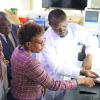
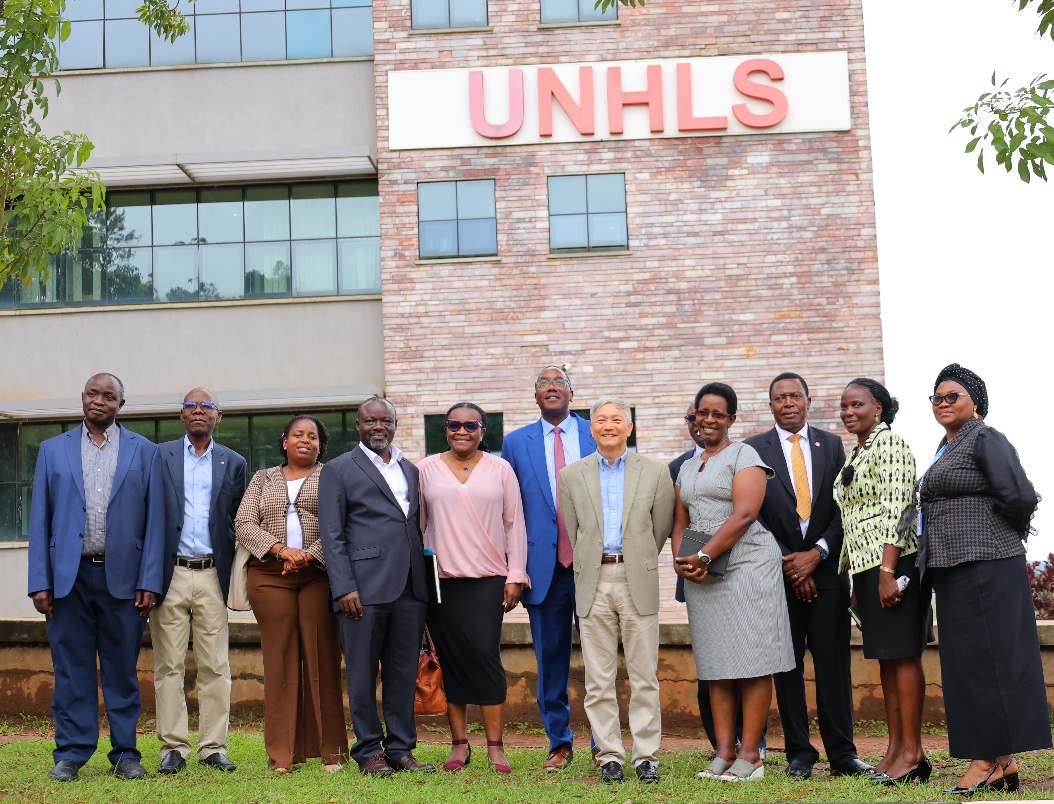
This was during a visit to the Department of National Health Laboratory and Diagnostic Services (NHLDS) by the World Bank Country Director for Kenya, Rwanda, Somalia, and Uganda, Dr. Qimiao Fan. He praised the Ministry of Health Uganda for building a strong and responsive health surveillance system.
“When it comes to surveillance and response to outbreak Uganda has been a leader on this front in the region. We are very proud to have been your partner in this important journey. I do like to continue to support you but would like a broader discussion with government on Health sector financing. You have done a wonderful job to get where you are and we will continue the support,” Dr. Fan stated.
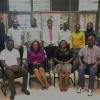
He was received by Permanent Secretary Dr. Diana Atwine, Director General Health Services Dr. Charles Olaro, Commissioner Dr. Susan Nabadda, and the NHLDS team.
The delegation toured key facilities, including the calibration center and several reference laboratories, before holding a high-level meeting chaired by the Permanent Secretary.
During the discussions, Dr. Fan also called for broader discussions on sustainable health sector financing to safeguard these gains.
Dr. Diana Atwine welcomed the continued partnership, noting that investments in laboratory infrastructure, workforce development, and diagnostic capacity have positioned Uganda ahead of many countries.
“We treasure this collaboration. It helped us build strong systems early, which gave us an advantage during COVID-19. The capacity we have built not only in infrastructure but increased testing capacity means that we need to continue positioning Uganda to expand and train many countries as the leader in Lab. Diseases don’t know boundaries and better when we are all equipped and Uganda has demonstrated that capacity.” Dr. Diana said.
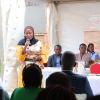
During the meeting, Prof. Moses Joloba, Director of the National Tuberculosis Reference Laboratory, outlined some of the key achievements under the World Bank-supported laboratory strengthening program, including:
Infrastructure development across five sites
Accreditation of the NTRL and 104 additional facilities
Construction of satellite laboratories in Fort Portal, Lira, and Mbarara
Capacity building for laboratory staff locally and across the East and Central Africa region
Development of proficiency testing panels
Strengthening laboratory systems and production capacity
Rollout of patient-centered solutions such as Laboratory Information Management Systems (LIMS) and sample referral networks enabling real-time results delivery
Despite these gains, NHLDS leadership emphasized the need for sustained investment to retain skilled personnel and expand support across the continent, especially as external funding declines.
Dr. Atwine noted ongoing government efforts to address sustainability challenges, including increased domestic financing aligned with Universal Health Coverage goals.
“We have heard discussions with Ministry of Finance on health sector sustainability. There were commitments made to see more investment in the health sector to achieve the Universal health coverage targets. The Head of State is also commitment to ensure government provides the health financing to bridge the gap.” She adds.
The World Bank has supported Uganda’s laboratory strengthening efforts through multiple initiatives, playing a key role in advancing the country’s outbreak preparedness and response capacity.